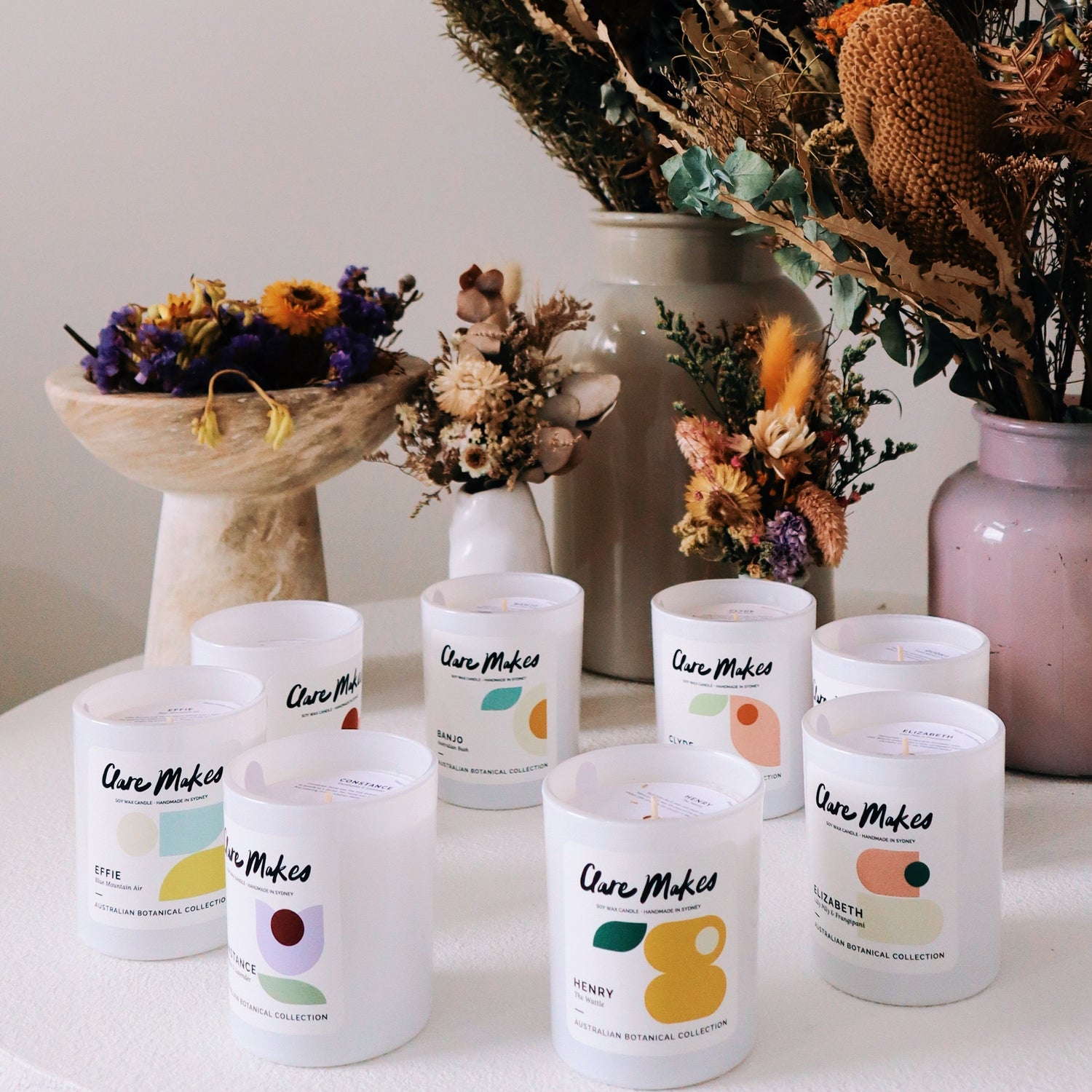


Why Fragrance Oils Are Safer for Candles | Clare Makes
Why Fragrance Oils Are Safer for Candles (And Why Pure Essential Oils Aren't)
The Misinformation Problem
There's a lot of confusion out there about candle fragrances. Many people assume that "natural" automatically means "safer," and that "synthetic" is something to avoid. When it comes to candles, this assumption can actually lead you away from the safest choice.
Let me clear this up: the safest candles use quality fragrance oils, not pure essential oils.
It sounds counterintuitive, but there's solid chemistry behind it.

Why Pure Essential Oils Don't Belong in Burning Candles
Essential oils are wonderful for many things like diffusers, skincare and aromatherapy. But candles aren't one of them.
Here's what happens when you try to burn pure essential oils:
- They're too volatile. Essential oils evaporate quickly at room temperature, and they become dangerously unstable when exposed to the heat of a flame. This creates safety concerns that don't exist with properly formulated fragrance oils.
- The scent shifts constantly. Pure EOs vary from batch to batch because they're natural plant extracts. One bottle of lavender oil might smell slightly different from the next, depending on growing conditions, harvest time, and processing. In a candle, this inconsistency is a real problem. You can't reliably replicate clean, crisp, or complex scent profiles with just essential oils.
- You lose entire scent families. Some of the most popular candle scents (fresh florals, crisp citrus notes, certain woody aromas) simply can't be created with pure essential oils alone. The chemistry doesn't work. If you want these scents, you need fragrance oils.
What Makes Fragrance Oils Safe for Candles
Quality fragrance oils are specifically engineered for candle burning. They're formulated to:
- Stay stable when exposed to heat
- Deliver consistent scent throw from candle to candle
- Blend in ways that create complex, realistic aromas
- Burn safely without compromising air quality
And here's the important part: fragrance oils aren't all synthetic. Many include plant-based components. They're just stabilized and formulated in ways that make them safe and reliable for burning.

What You Should Actually Look For
If you're shopping for candles with safety in mind, here's what matters:
- No phthalates. Phthalates are plasticizers sometimes used in fragrances. Reputable candle makers actively avoid them. If a brand doesn't mention phthalate-free on their site, it's worth asking.
- No parabens. Parabens are preservatives that have no place in fragrance formulations designed for burning. Good fragrance oils don't need them.
- No nitro musks. Nitro musks are older synthetic musk compounds that have raised environmental and bioaccumulation concerns. Modern fragrance oils use safety-assessed synthetic musk ingredients instead, formulated to comply with IFRA (International Fragrance Association) safety standards.
- IFRA compliance. This is your safest signal. IFRA standards ensure that fragrance ingredients have been safety-assessed for their intended use. If a fragrance oil is IFRA-compliant for candle applications, you know it's been properly vetted.
How to Shop for Safe Candles
When you're browsing for candles, look for transparency. A brand that cares about safety will be clear about what goes into their products.
Check the Product Description
Good candle makers will tell you about their fragrance oils upfront. Look for language like:
- "Phthalate-free fragrance oils"
- "IFRA-compliant fragrances"
- "No nitro musks"
- "Premium quality fragrance oils"
If the product description is vague or uses phrases like "mystery fragrance blend" without explaining why, that's a yellow flag.
Look at the Safety List
Most candle makers list their safety information, either on the product page or on the physical label. If you can't find an safety list, ask. A maker who stands behind their product will be happy to share.
You won't see individual fragrance components listed (fragrance companies don't release proprietary blend recipes), but you should see clear information about what's NOT in the candle.
Check the Company Website
Reputable candle makers have an FAQ or "About Our Ingredients" page. This shows they've thought through the safety questions and are prepared to answer them. If you land on a website with no information about fragrance sourcing or safety, it's worth questioning why.
Questions to Ask When Buying Candles
If you're unsure about a brand, don't hesitate to reach out directly. Here are great questions to ask:
- "Are your fragrances phthalate-free and paraben-free?"
- "Do you use IFRA-compliant fragrance oils?"
- "What type of musks do you use in your scented candles?"
- "Can you tell me about your fragrance supplier and their safety standards?"
- "Why did you choose fragrance oils over essential oils?"
- "Do you have any certifications or third-party testing for your fragrances?"
A maker who can answer these questions clearly and confidently is someone you can trust. If they get defensive or dismissive, that's a sign to shop elsewhere.

Red Flags: What to Avoid
Be Cautious Of:
- Claims of "100% natural fragrance." If it smells like a crisp ocean breeze or fresh linen, it's not 100% natural. Be skeptical of this claim.
- Vague language about ingredients. Words like "proprietary blend" (without explanation) or "trade secret formula" can hide poor ingredient choices. Good makers explain WHY they keep formulas private.
- Unusually cheap candles. Quality fragrance oils cost money. If a candle is significantly cheaper than competitors, the fragrance quality might be compromised.
- No information available online. In 2024, if a candle company doesn't have accessible information about their ingredients, that's a red flag.
- "Essential oil" candles marketed as premium. As we've covered, this is either a misunderstanding or a marketing gimmick. Either way, be cautious.
- Overwhelming scent throw with no explanation. If a candle produces an intense smell from across the room, find out why. Sometimes it's good fragrance formulation. Sometimes it's too much fragrance oil or concerning additives.
The Bottom Line
The safest candle is one made with quality fragrance oils that:
- Use no phthalates, parabens, or nitro musks
- Are safety-assessed and IFRA-compliant
- Come from a supplier who knows their craft
This isn't about "natural" versus "synthetic." It's about choosing ingredients that are formulated for the specific job they're doing. A well-made fragrance oil is safer, more reliable, and more effective in a candle than pure essential oil ever could be.
When a candle maker chooses fragrance oils thoughtfully, they're making a deliberate safety decision. It's worth asking your candle maker about theirs.

Next Steps
If you love candles and care about what you're bringing into your home, don't be shy about asking questions. A good candle maker will welcome the conversation. Look for brands that are transparent, educated, and proud of their ingredient choices. Your home deserves safe, beautifully scented candles that you can feel good about burning.
Clare Makes and Candle Safety
Everything you've read above reflects our philosophy at Clare Makes. We didn't choose fragrance oils over essential oils by accident. We made that choice deliberately, with your safety in mind.
Every candle we make uses premium quality fragrance oils that are:
- Phthalate-free. We work directly with our fragrance supplier to ensure every oil meets this standard.
- Paraben-free. Our formulations don't contain parabens or any unnecessary preservatives.
- Free from nitro musks. We use only modern, safety-assessed synthetic musk ingredients that comply with current IFRA requirements.
- IFRA-compliant. Our fragrances are formulated specifically for candle applications and have been safety-assessed for burning.
This means when you burn a Clare Makes candle, you're burning something that's been formulated with care. The scent is consistent from candle to candle. The fragrance throw is reliable. And most importantly, you can feel confident about what you're bringing into your home.
We believe in transparency. If you ever have questions about what's in our candles or why we've made the choices we have, we're here to answer. We're proud of our ingredients and the suppliers we work with, and we think that transparency matters.

Questions about candle safety? We're always happy to talk about what goes into Clare Makes candles and why we make the choices we do. Reach out anytime.