

Scent Fatigue Explained: Why You Can't Smell Your Own Candle Anymore
You light your favourite candle, breathe in, and think: has this stopped working? You check the wick. You check the wax level. Everything looks fine, but somehow it just doesn't smell the way it did the first week you owned it.
Here's the good news: your candle is fine. Your nose is doing exactly what noses are designed to do.
Why your candle "disappears" after a while
This phenomenon is called olfactory adaptation, or more casually, nose blindness. Your brain is built to notice new smells and filter out ones that stay constant. It's the same reason you stop smelling your own home after five minutes inside it, but a guest walking through the door notices it instantly. The scent hasn't gone anywhere; your brain has simply decided it's no longer new information worth paying attention to.
It happens faster than most people expect, sometimes within minutes of lighting a candle, and it happens to everyone. Perfumers deal with the same issue, which is why they smell coffee beans between fragrances to reset their nose. Estée Lauder herself reportedly kept a jar of coffee on her desk for exactly this reason.

It's not a sign of a weak candle
This is the part worth sitting with: adaptation happens with strong fragrances too, sometimes more so. A candle with a genuinely good scent throw can feel like it's "faded" faster simply because your nose adjusted to it more quickly. Meanwhile, someone walking into your home for the first time will get the full hit of it.
So if you've ever wondered whether you need a stronger candle, that's usually not the problem. The problem is that you've been breathing the same fragrance molecules for long enough that your brain has quietly tuned them out.
How to reset your nose in the moment
If you want to actually smell your candle again right now, a few things work quickly:
- Step outside or into another room for a minute or two, then come back
- Smell something neutral first, like your own wrist or a plain cotton fabric
- Take a few breaths of fresh, unscented air before returning to the room
- Try smelling coffee grounds, which perfumers use to clear the palate between scents
Any of these gives your brain a chance to stop filtering and notice the fragrance as new again.
The better long-term fix: rotate your scents (and your formats)
A quick reset works for a single evening, but it doesn't solve the underlying issue: if you only ever burn one candle, your nose will keep adapting to it, every time. The real fix is variety, and it doesn't have to mean buying a whole new fragrance from scratch.
Take Quong: Lemon Myrtle & Ginger, one scent, available as a candle, a room spray, and a reed diffuser. That's actually the easiest way to build a rotation without overcomplicating your shelf: burn the candle in the evening, let the diffuser carry the same scent quietly through the day, and use the room spray for a quick top-up when you walk in the door. Because you're not smelling it continuously in the same form, your nose gets small breaks it wouldn't get from a candle burning on its own, and the fragrance feels more vivid each time you notice it.
If you'd rather introduce genuine contrast, keeping two or three different scent profiles on hand works even better. Your nose never gets the chance to fully tune one out, and rotating between something crisp and something warmer means both feel more vivid than either would on repeat for weeks.
Build a scent rotation, not just a single candle
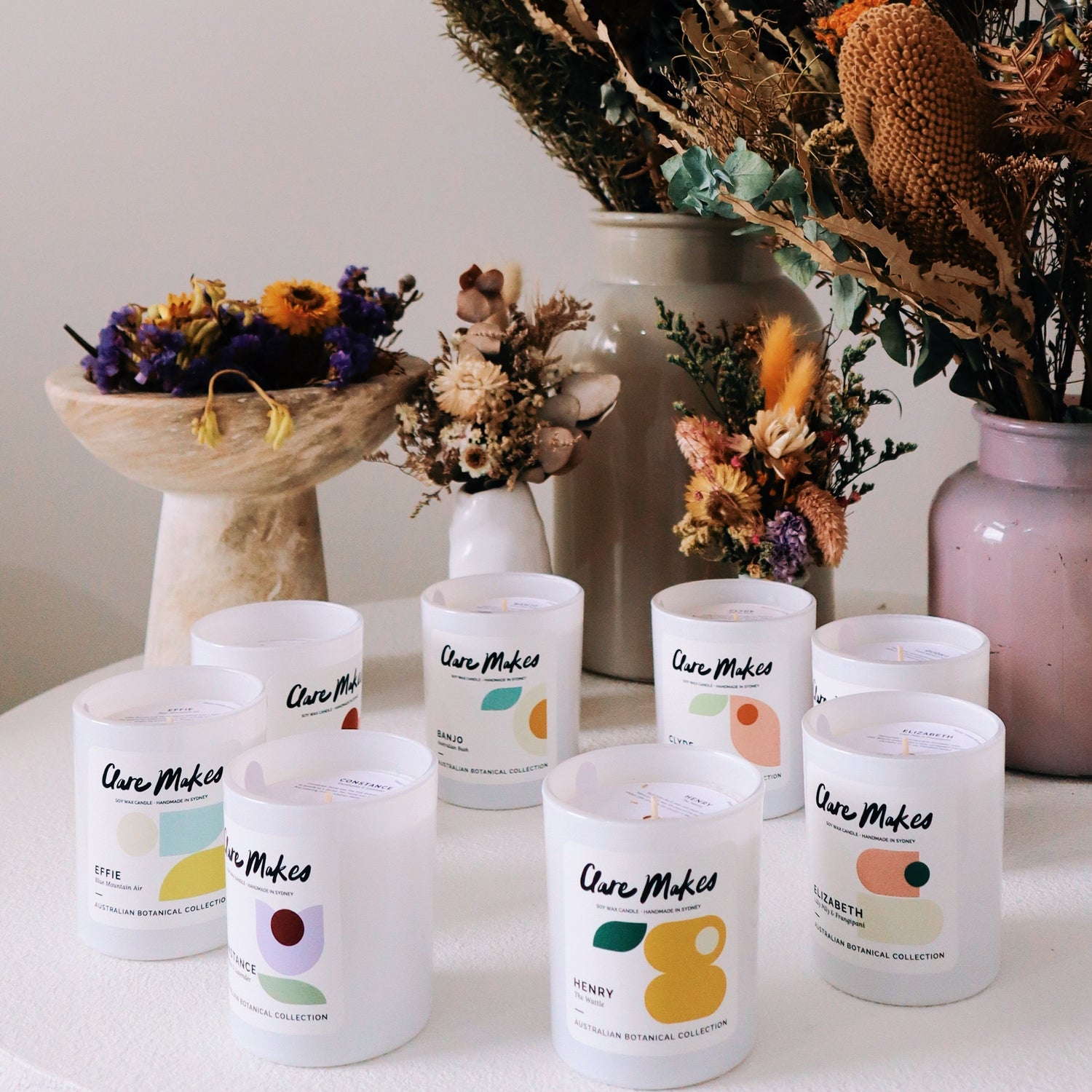
Every Clare Makes scent is built around a different native botanical story, so switching between them, or between formats of the same scent, does more than freshen your nose: it changes the whole feeling of a room. Explore the full range →

A candle that "used up its scent" probably hasn't
One last thing worth knowing: if a candle smells strong when you first open the lid (that's called cold throw) but seems to fade once it's been burning a while, that's very often adaptation too, not a drop in fragrance oil. Walk away for ten minutes and come back, and most people are surprised to find the room still smells exactly as it did.
None of this means you're imagining things, and it definitely doesn't mean you need to buy a stronger candle. What it usually means is that it's time to add a second scent, or a second format, into the mix, and give your nose something new to notice.
Ready to build your own rotation? Take a look at the Clare Makes collection of Australian made candles and find a second scent (or a second format of your favourite) to keep your senses on their toes.